Weekly Roundup 2026-09-20
Jarvising, LLMs as the new FSD, More Vintage Cameras
LLMs
Cory Doctorow's latest is making me think about how the current framing of AI for efficiency is the exact opposite approach to the Toyota Production System. In the operational management traditions that spring from it, understanding the work is the core requirement. Cory's lens is a labour rights one (and I think that's an important framing), but the criticism is equally valid through an operational improvement one.
A boss who lays hands upon an AI tool doesn't have to know how to draw a picture, balance books, or write technical documentation. They only have to prompt the production of these things. For bosses, AI is a great leveler: it is sold as a way to distill and package up the skill and discernment of workers and infuse them into a pliable automaton.
This framing feels like it has some explanatory power for the repeated failure to derive actual operational value from AI "transformation".
Robin Sloan's post on the value he gets out of LLMs has triggered a barrage of notes and sparked a few new ideas for me to explore. As I think through and experiment on where LLMs can and should add value to business operations like delivery and support, Robin's clear point of view really helped sharpen my own.
The consensus vision seems to involve AI working for you day-to-day, a constant ambient presence, sparkles in everything; even cautious Apple has succumbed. I’m not interested in that.
My alternative: get your wish, then stuff the genie back into the lamp.
My own use of Claude for improving my personal infrastructure has ended up in a similar place. Get an LLM to write the script, not run the process.
Robin also articulates the dangers of Jarvising which I think may be an entirely new form of procrastination that I have definitely experienced. Getting sucked into endlessly tweaking tools with an LLM coding partner is so seductive because you feel like you are actually producing something. But you're not. Organizing your running shoes is not the same as going for a run.
In a similar vein, this post on Sockpuppet.org is a concrete, practical guide not just to how to use LLMs for copyediting, but also provides a framework for thinking about how to embed AI in your work in a way that enhances value by treating it as a tool, rather than replacing or destroying value by treating it as a digital employee. The LLM-enabled management practice is starting to be shaped and I think that these two posts are good examples of how to think about creating value with these new capabilities.
Ed Niedermeyer, a journalist who has spent years documenting Tesla and Elon's insanity, has compared the current AI hype to the self driving hype of ten years ago. I think his observations are spot on and can help us understand how to rescue some legitimate value from LLM technology in the face of the polarizing hype. It's easy to laugh about Waymos being foiled by traffic cones on their hoods, but getting 90% of the way there has created all sorts of consumer benefits, from radar cruise control to emergency braking and lane drift warnings. The last 10% may be impossible, but there is still value in the technology. I think the same is true of LLMs. They are never going to be the capitalist fantasy of a general digital employee but there are still new and unique paths to value in the technology.
Vintage Cameras
The Instax Parvola came together in spectacular fashion. Here's my post on the moment the first picture came out of this mad contraption. And here's a detailed post that explains how it all works. I am delighted by the absurd end product and our first few photos.
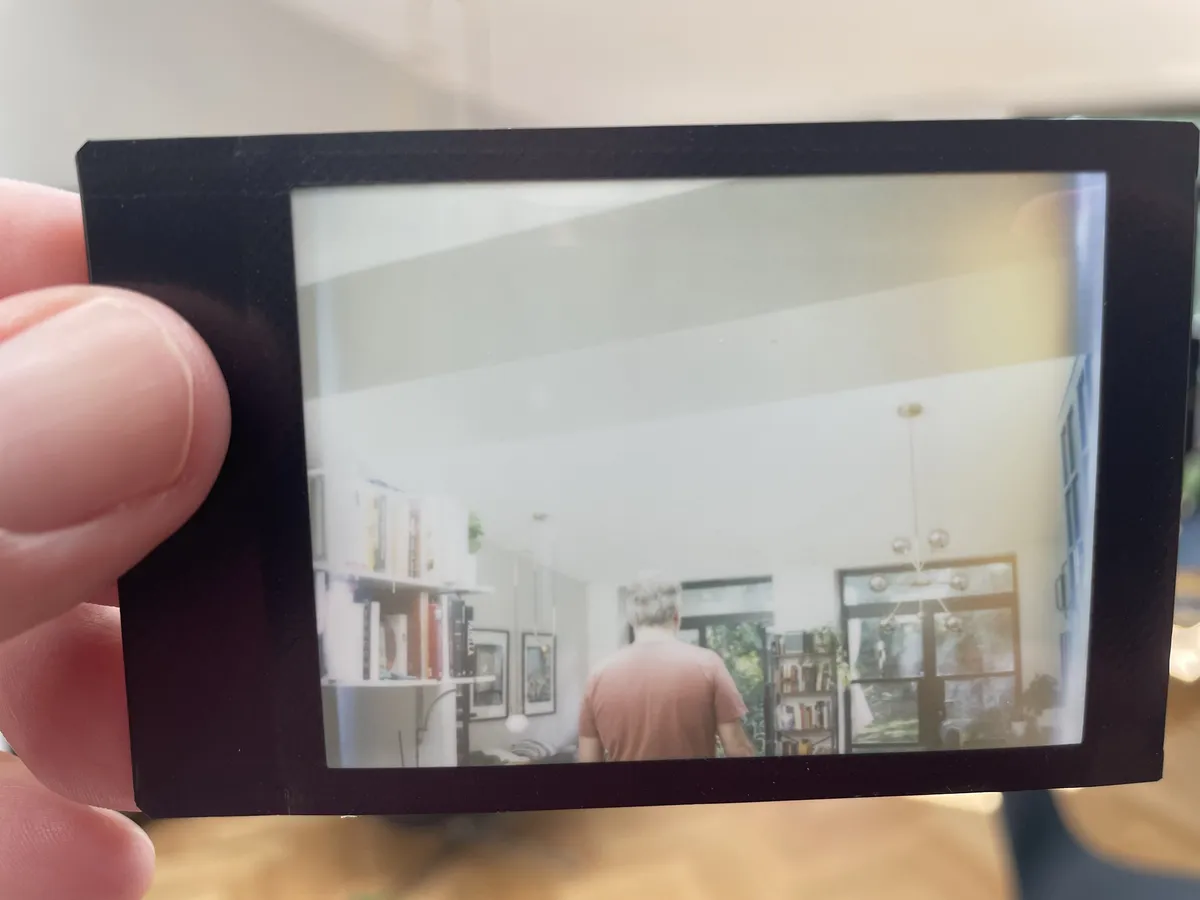
There are some quality of life improvements to make, but all in all it was an unqualified success. Some 3d printed parts would tidy up the build and get rid of the janky attachment method. I'm already planning how I could do the same conversion on another 127 format cameras, perhaps with the big brother of the Parvola, the Exakta.
Manchester
We are spending some time in Manchester getting the youngest settled in halls for their first year at Manchester School of Art. I love the energy of the city. It's youthful in a way Oxford can never be, it's direct in a way that is a refreshing contrast to London, and it's just a beautiful built environment. Definitely needs a road diet, but was glad to see half of Deansgate given back to people and bicycles.